

Circular Fashion Explained: Driving Sustainable Value
Traditional fashion models leave European sustainability leaders facing a tough question: how can they design for growth without fueling waste? In today’s purpose-driven market, fashion executives must address the urgent need to reshape clothing production by adopting circular solutions grounded in resource efficiency and lifecycle management. Discover how circular fashion models and advanced AI technologies empower brands to extend garment lifespans, increase customer value, and build resilient, future-ready operations rooted in sustainability.
Defining Circular Fashion and Key Concepts
Circular fashion represents a transformative approach to sustainable clothing production and consumption. Unlike traditional linear fashion models that follow a “take-make-dispose” pattern, circular fashion seeks to rethink global textile systems through innovative design and systemic change.
At its core, circular fashion encompasses several key principles designed to minimize waste and maximize resource efficiency:
The circular fashion model goes beyond environmental considerations, integrating economic, social, and cultural dimensions. Collaborative efforts among consumers, industry, and governments are crucial in accelerating this systemic transformation. By reimagining fashion as a regenerative system, brands can reduce pollution, minimize waste, and create more sustainable value chains.

Implementing circular fashion requires a holistic strategy that connects design, technology, and consumer engagement. This means developing new business models that prioritize product longevity, facilitate repair and resale, and create transparent, traceable supply chains.
Pro tip: Start by mapping your current product lifecycle and identifying potential circular intervention points where materials can be recovered, recycled, or regenerated.
Circular Fashion Models and Variations
Circular fashion has evolved into multiple innovative business models that challenge traditional retail approaches. Technological advancements and sustainability demands are driving the development of diverse strategies that extend a garment’s lifecycle and create new economic value.
Several key circular fashion models have emerged, each addressing different aspects of sustainability and consumer engagement:
Systemic circular business approaches are increasingly demonstrating that sustainability can be economically viable. These models not only reduce environmental impact but also create new revenue streams and customer engagement opportunities for fashion brands.
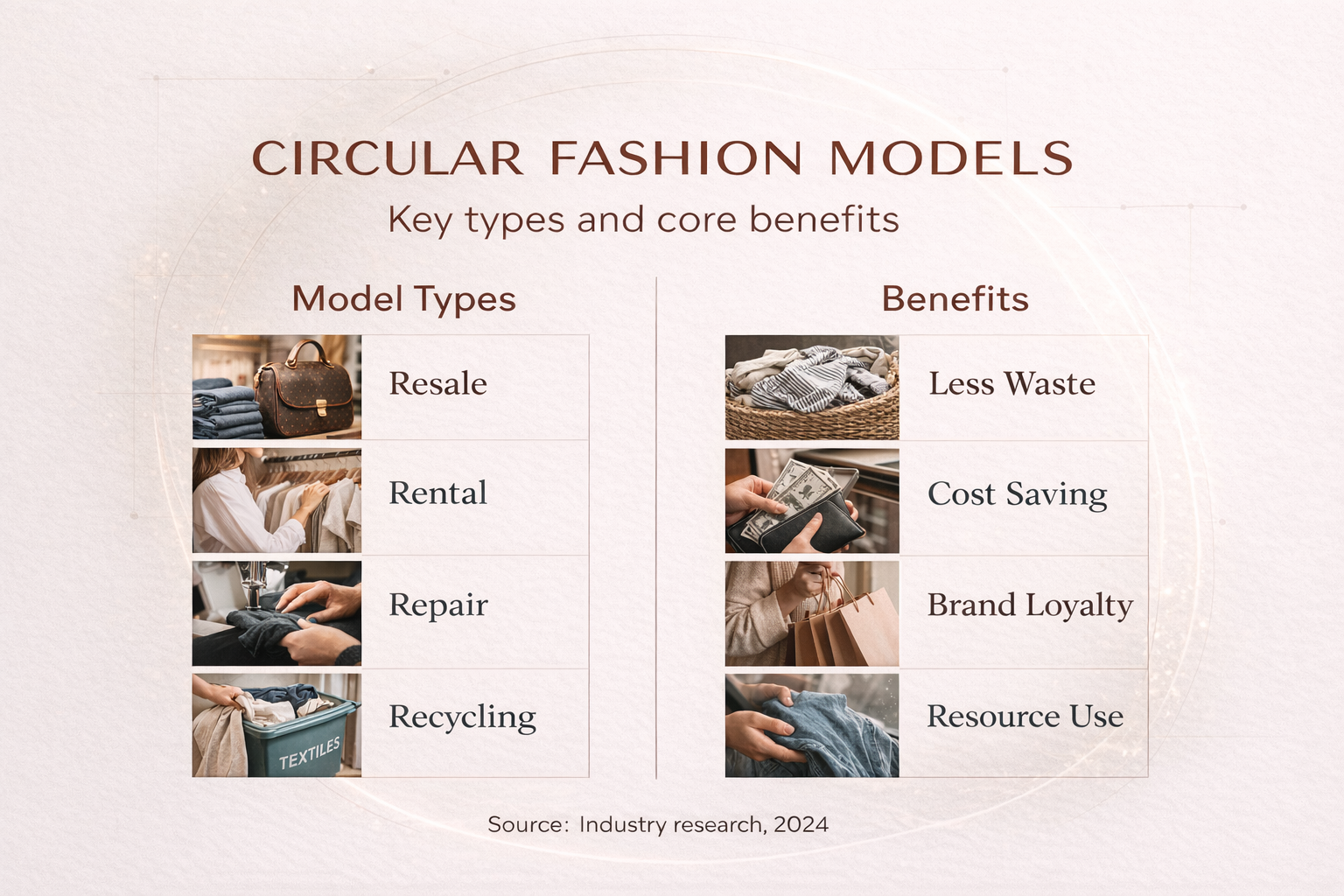
Technological innovations are critical in scaling these circular models. Advanced tracking systems, material passport technologies, and AI-driven recommendation engines are enabling more sophisticated circular fashion ecosystems that can predict, manage, and optimize product lifecycles.
Pro tip: Assess your current business model’s potential for circular integration by identifying which existing processes can be adapted to support material reuse and extended product lifecycles.
How Circular Fashion Works in Practice
Circular design principles transform traditional fashion production by reimagining every stage of a garment’s lifecycle. Instead of treating clothing as disposable, brands are developing strategies that prioritize longevity, repairability, and material recovery.
The practical implementation of circular fashion involves several critical components:
Real-world cases demonstrate how brands are closing the loop through innovative approaches. This includes developing take-back programs, creating repair services, and redesigning products to extend their usable lifecycle.
Technological innovations play a crucial role in scaling circular fashion practices. Advanced tracking systems, blockchain technologies, and AI-powered material analysis enable brands to trace, assess, and optimize product lifecycles with unprecedented precision. These technologies transform circular fashion from a theoretical concept into a practical, measurable business strategy.
Pro tip: Begin your circular fashion journey by conducting a comprehensive audit of your current product design and manufacturing processes to identify immediate opportunities for material recovery and lifecycle extension.
AI and Technology for Circularity
Advanced technologies are transforming the fashion industry’s approach to sustainability, creating unprecedented opportunities for circular design and resource optimization. AI and innovative digital technologies are enabling fashion brands to reimagine product lifecycles, from material selection to end-of-life management.
Key technological innovations driving circular fashion include:
Technological solutions support circular business models by creating sophisticated systems for tracking, analyzing, and extending product lifecycles. These innovations help brands transform waste into valuable resources, reducing environmental impact while creating new economic opportunities.
AI-driven technologies are particularly powerful in optimizing material recovery and recycling processes. Advanced algorithms can now predict fabric degradation, recommend repair strategies, and map potential recycling pathways with remarkable precision. This technological approach turns circularity from a theoretical concept into a data-driven, measurable business strategy.
Pro tip: Invest in AI-powered material tracking and analysis technologies that can help you understand and optimize your product’s entire lifecycle from design to potential reuse or recycling.
Business Benefits and Measurable Outcomes
Economic advantages of circular fashion extend far beyond environmental sustainability, presenting strategic opportunities for businesses to create value, reduce costs, and differentiate themselves in a competitive market. By reimagining traditional linear production models, companies can unlock significant financial and operational benefits.
Key measurable business outcomes of circular fashion include:
Lifecycle assessment methodologies provide concrete evidence of circular fashion’s economic potential. These quantitative approaches help businesses translate sustainability efforts into tangible financial metrics, demonstrating that environmental responsibility can drive economic performance.
Companies implementing circular strategies can expect measurable benefits such as reduced waste management costs, improved material efficiency, and enhanced brand reputation. Advanced tracking technologies enable precise measurement of circularity impact, transforming sustainability from a cost center to a strategic value driver.
The following table summarizes the core business outcomes enabled by adopting circular fashion strategies:
OutcomeDescriptionStrategic AdvantageCost ReductionCuts raw material expensesIncreases overall profitsSupply Chain ResilienceDiversifies sourcing and reduces riskStabilizes operationsBrand DifferentiationHighlights sustainable leadershipAttracts loyal customersRevenue GenerationUnlocks resale and recycling marketsSustains business growth
Pro tip: Develop comprehensive sustainability metrics that translate circular fashion initiatives into clear financial key performance indicators to demonstrate tangible business value.
Empower Your Brand to Lead in Circular Fashion Today
The article highlights the urgent challenge fashion brands face in transforming their traditional linear models into circular ecosystems that replicate value while reducing waste. Key pain points include managing product lifecycles effectively, enabling repair and resale, and deploying technology solutions that connect every garment from sale to recovery. These goals align perfectly with the concept of circular fashion as an engine for sustainability and business growth.
At Reclaim, we understand that embracing circularity is more than just a good intention. It requires intelligent tools that translate complex lifecycles into measurable commercial actions. Our AI-powered platform delivers exactly that by offering product recognition, future-value prediction, and smart routing to resale, donation, or recycling channels. This means brands can drive lifetime value and stabilize recovery flows automatically, turning circular fashion into a strategic advantage rather than an extra program to manage. Explore how circular fashion principles meet actionable solutions through circular business models.
Are you ready to expand your brand’s impact by integrating circularity into every sale? Visit Reclaim now to discover how our innovative AI infrastructure can help you unlock new revenue streams, reduce acquisition costs, and build a truly circular future. Start turning sustainability into measurable business value today.
Frequently Asked Questions
What is circular fashion?
Circular fashion is a sustainable approach to clothing production and consumption that aims to minimize waste and maximize resource efficiency through strategies like design for longevity, material innovation, and closed-loop systems.
How can businesses benefit from adopting circular fashion models?
Businesses can experience several benefits, including cost reduction, supply chain resilience, brand differentiation, and new revenue generation opportunities from product recycling and resale.
What are some examples of circular fashion models?
Examples of circular fashion models include resale platforms, rental services, repair and alteration programs, design for disassembly, and subscription wardrobe models, each aiming to extend the lifecycle of garments and enhance sustainability.
How does technology support circular fashion initiatives?
Technology plays a crucial role in circular fashion by enabling advanced tracking systems, digital product passports, and AI-driven analyses to optimize material recovery, monitor product lifecycles, and enhance recycling processes.


